Showing posts with label Focusing Inquiry. Show all posts

Thursday, November 15, 2018

Impact Story

This year i focused on achievement challenge 5: 
Improve the achievement of students with additional needs in the learning areas of English/key competency using language symbols and texts

My inquiry question was:
Will increasing the Key Competency “Managing Self” improve student achievement in reading?

This year i continued my inquiry from the previous year but implemented the process I undertook with a new group of learners. Last year i had a group of high functioning boys with Autism, this year i had a group of new entrant students with a range of disabilities. Due to the nature of my classroom where some students spent a short period of time with me before transitioning out to a satellite class (at a mainstream school), my focus group of students changes each term which made my inquiry more challenging.


WHAT HAPPENED TO MY LEARNERS?
- All students increased their ability to remain seated.
- All students were able to engage in self selected reading (SSR) independently.
- All students learnt pre reading skills such as turning the page, pointing to the words and using visuals.
- Non-verbal students were able to attend to their AAC (augmentative and alternative communication).
- 2 students were able to recognise some high frequency words by the end of the year.
- All students were able to follow the classroom routine.
- 1 student in my focus group transitioned to a satellite successfully and moved up 1 reading level.
- Parents commented on how they were able to enjoy a reading book at home with their child.
WHAT EVIDENCE DO I HAVE?
Due to the nature of my students, much of this year was spent building a rapport and transitioning them into school routines. I wasn't able to do much formative assessment as they were not able to sit and attend to the assessment. Many of them were not sure how to point so i was unsure of how to test their current skills. However as the year went on I was able to find out how each student could be tested and that is how i gathered my data. I also gathered evidence by noting how long they were able to attend or sit for as well as follow classroom routines.


WHAT DID I DO?
- Built strong relationships with both the students and their families by sending home a questionnaire.
- I used this information to make personalised books about their hobbies and interests.
- I implemented a sensory curriculum to engage them in learning tasks (a transitional programme from kindy to school).
- I put structure and routines in place so that the routine in class was predictable, this took out any anxiety about what was going to happen at school each day. All students were introduced to an individual timetable.
- Reading packs were set up: 1x book per week with individualised activities that went home each day.
WHERE TO NEXT?
This year went very differently to last year as my students last year already had foundation reading skills. This year i have had to teach them alphabet knowledge and for some students, how to use a book. While many of my students were not able to move up a reading level, their pre reading skills improved.
My wanderings about where to next is, how do we test those students who are nonverbal? How can we tell if they are reading in their head? How do we teach them to point in order to answer comprehension questions. This is one of the biggest challenges i have faced this year as the majority of my class are non-verbal or have restricted language.


As i write my end of year reflection, I feel proud of what my students have accomplished but also how i have grown as a teacher. I feel fortunate to have been a part of this journey for two years. I hope you have enjoyed being part of the ride and learnt something from my blog this year.


Saturday, November 3, 2018

What have i implemented this year?

Here is a short video summary of what i have implemented this year as part of my 2018 inquiry.
This year has been a huge learning curve for me. I have always had students who had come to me with foundation reading skills but this year i have had the opportunity to teach those skills to students who have not had much exposure to a structured class setting. While much of the year has been spent on teaching skills such as engagement, communication and increased work time, I have still seen huge shifts in my students reading. As i write my end of year reflections I am proud of all the students who have hit so many milestones, not only starting school but gaining skills in areas where they have not previously excelled.

Wednesday, October 17, 2018

Reading Sucess

One student in my focus group has done particularly well this year. At the beginning of the year he was unable to attend to a task for long periods of time. He is now able to sit and work for up to 20 minutes (previously he wasnt able to sit longer than 1 minute at a non-preferred activity).

Through predictable classroom routines, implementing a visual schedule, a work/reward system and regular sensory breaks we saw a huge increase of on task engagement.
While he has stayed on level 1 Magenta he has learnt many foundation pre reading skills which are the building blocks for learning how to read. Skills such as:

- pointing to the words
- reading aloud
- turning the page
- recognising high frequency words
- looking at the pictures for decoding words
- attempting to read words that look the same (eg look and like)

One of the biggest achievements for this student has been feedback from his family who are now able to enjoy reading a book together at home.


Sunday, October 7, 2018

Where to next?

Where to next???
Term 4 is a short and very busy term. I will have a new student starting school and my class will have grown to 9 students which is the most i have had in a special education setting.
I will need to work on my classroom management to ensure that i am able to manage the amount of students in the class. I have decided to split my class into two groups during work time to see if i can spend more 1:1 time to work on individual literacy goals.
I also have 4 new students in the class, some have started taking reading packs home and the others will start this term.

Oliver: implement behavior programme outlined by the student who was working with Oliver last term. I also want to see how many letters of the alphabet he can recognise as I have tried testing multiple times but all my testing has come up with different results.

Benjamin: work on reading aloud, learning high frequency words and comprehension.

Saturday, September 15, 2018

Interest Based Learning

Interest Based Learning is a strategy that Special Education Teachers naturally become quite skilled at. When so many students are difficult to engage then you will use whatever you can to spark their interest.
I had a student last year that enjoyed writing about lawnmowers. On challenging days where i wasn't able to get him to do any writing, we would research his favourite lawnmower and write a story about it.
When i get a new student in my classroom, the first thing i do is send home a questionnaire asking about their special interests, hobbies, important people in their lives and places they like to go. I then use this information to create activities and resources to use to teach them new skills.
One of my students enjoys watching things fall. This can often be a barrier to his learning as he will continuously drop materials instead of using them in a activity (eg puzzle pieces).
As part of my inquiry i am using a Interest Based Learning approach to engage and motive my learners. In this video you will see a alphabet activity i made based on my students interest of things falling. I gave him a choice of 2 letters and when he chose the correct one he could put the letter down the tube which then splashed into water. This activity was a highly motivating activity for this student who was so keen to choose the correct letter that he was able to focus and engage for the whole session.

Friday, September 7, 2018

Literacy apps for emergent readers.

Following on from my last post, i thought i would share some apps i have found to be successful in the classroom and across Sommerville Special School. I use the iPads as an independent activity as part of my writing rotation.
I have downloaded a whole bunch of other new apps which i will spend some time using in the classroom before sharing. Enjoy!


 Writing Wizard:
- excellent tool for tracing letters and numbers

 
 Sight words by photo touch:
- flashcards on screen that read out high frequency words which the student has to press
- great for testing sight word knowledge
 
 ABC alphabet by photo touch:
- same concept as the sight words app but upper case alphabet
- video shown on previous post
 
 Special words:
- teaching word concepts
- starts with matching picture to picture, then picture to word etc
- similar concept to the programme "my baby can read" 
 
 Elmo loves ABC's:
- All of my students enjoy exploring this app
- great for teaching alphabet knowledge
 
 ABC Magic 1:
- flashcards that word like a book. Students can flick through to explore letter sounds, letters and objects beginning with that letter

Thursday, August 2, 2018

Personalised books

Reading should be highly engaging, especially for new and emergent readers. Often the language used in Magenta readers are simple to encourage high frequency word recognition at an early stage. Many of my new students that arrive at school are unable to attend for long periods of time let alone taking part in a shared reading experience at mat time.
To overcome this challenge I have split my class into two groups. 

- One group reads 1:1 with an adult on their individual reading which includes activities i have shared on this blog. Activities include; responding to visuals, identifying high frequency words, matching visuals to the pictures/words and colorful semantics. 

- One group to work on foundation reading tasks such as turning the page, pointing to the words, looking at the book, pointing to pictures and engaging in a story. For this group i have had to adapt my resources to suit their interests. 

At the beginning of the year I always send home a questionnaire  to ask about the students and their interest. Using this information I made lots of books that the students would be interested in so they can choose a book for silent reading. I have had a breakthrough with one of my students who has taken much longer to settle this year. She is now choosing to read a book to read and turning the pages on her own. 

Wednesday, July 11, 2018

Colourful Somantics

I posted last year on my blog about colourful semantics and how well it can work for students with communication needs.

You can see the previous post by clicking here.

I have started to use the same resources i used last year however i have simplified the activities by focusing on ONE key area. I am going to include colourful semantics activities in my writing rotation.
My students are working on answering questions about the story, for students who do not yet have the language or are non-verbal then using visuals allows them the chance to be able to communicate their answer.
In this activity, the student is working on answering "who" using pictures from the story. Using the colourful semantics system, "who" is coloured orange. He has to look at the picture and choose the correct visual to identify characters from the story.
I will use this programme in my writing rotation as well.
There is plenty of resources avalibale online. you can find more information by clicking here. 

Friday, June 29, 2018

Student Sucess

This term one of my focus students, Conner, has excelled since starting school. Next term he will be attending one of our satellite classes. It is a good opportunity for him to be able to integrate with his mainstream peers.

In the two terms since he has started school he has learnt to;
- join group activities in the classroom
- complete his morning routine
- write his name
- use his individual timetable so that he understands what he is meant to be doing
- attend to learning activities for an extended period of time (from 5 minutes to 30 minutes). This was a goal for him in the classroom as part of my inquiry.
- reading skills: turning the page, pointing to the words, recognising high frequency words, retelling the story line, identifying the title, answering comprehension questions.
- he has moved from a Level 1 Magenta reader to Level 3 Red reader.
- his high frequency word recognition has increased (see graph).

I look forward to hearing how he progresses in his new classroom. I have two new students starting next term so i will choose another student to add to my focus group.


Monday, June 18, 2018

Progress update - Term 2

Term 2 has been a successful one for my students, especially the ones i have outlined in my focus group. When reflecting on this term and what made it successful it has been a combination of building relationships, having high expectations, building predictable routines and implementing a sensory curriculum including opportunities for movement breaks.

Oliver: I have the behavior team on board to assist with his behavior in the classroom, mainly around compliance for non-prefurred tasks. With a behavior plan put in place, Oliver is now more settled. He can complete tasks in a familiar routine such as unpacking his bag and writing his name. He will now sit and attend to his individual reader for short periods of time. I have not been able to assess his alphabet knowledge as of yet however i am hoping that next term i will be able to test him.

Conner: Conner has made the most progress this term. He joins all class group activities and has gone up two reading levels! He is now reading at red level 3 with excellent comprehension. He understands that he needs to complete all work tasks before he is allowed to play and has stopped leaving the table in the middle of a work block.

Benjamin: We have seen a huge increase of functional language being used throughout the day. Benjamin is like a sponge and just soaks up any learning, even when it appears he is not attending to the lesson he is able to show us that he understands the task. Benjamin still continues to run multiple times in circle time but during work tasks he is on task for the duration of the lesson. This term i was able to identify how many high frequency words he can recognise, this is a big breakthrough!

Next term i am keeping my programme relativly similar with a focus on comprehension during reading tasks using visuals to aide understanding of the text.

Thursday, May 31, 2018

Addressing sensory needs

My students need regular sensory input throughout the day in order to focus for extended periods of time. For some students this means implementing a "sensory diet".

"A sensory diet is a carefully designed, personalized activity plan that provides the sensory input a person needs to stay focused  and organised throughout the day." (Patricia Wilbager, OT)

When i look across my group of students i can recognize that most of my class are sensory seeking;  weather it is rocking on their chairs, walking around the room before sitting down, jumping off the chairs, or seeking tactile stimulation. I have worked with students in the past who were tactile defensive (refusal to explore tactile surroundings) and the class OT (occupational therapist) implemented a Wilbarger brush programme as part of a sensory diet. I was amazed at the success of using a brush to stimulate the skin in order to increase active exploration.

My class programme caters to the sensory needs in my classroom with regular sensory breaks offered to my students in order to increase their focus during work tasks. I timetable a movement break every 30 minutes. The breaks vary from jumping on the trampoline, going for a run, sensory play, swing and a exercise circuit. Some of my students such as Benjamin need more breaks in order to remain on task in the classroom. I make sure he goes on the swing for 2 minutes before he is expected to sit.

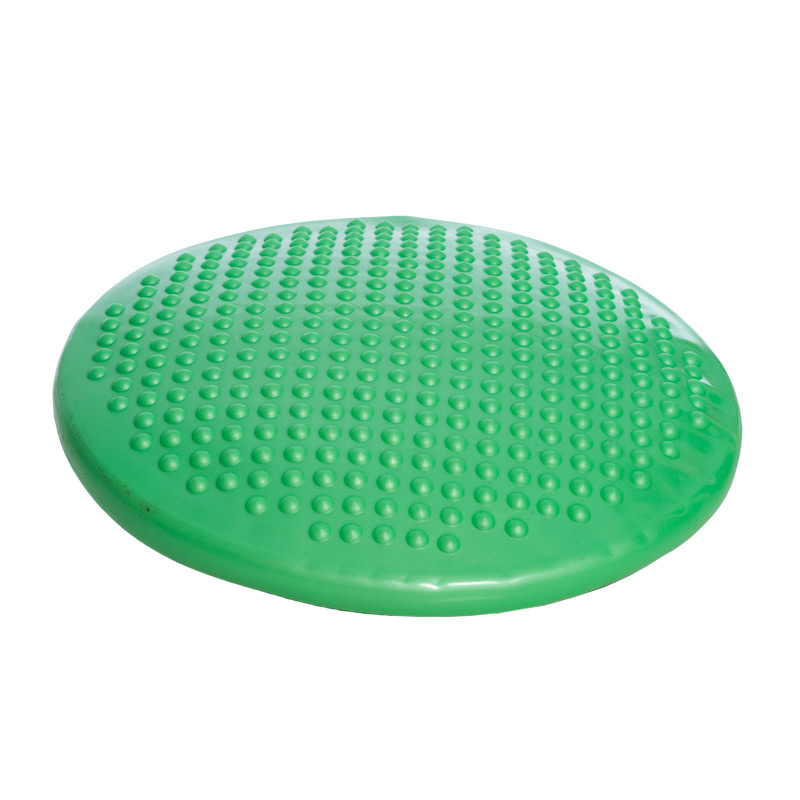
I am currently trialing a few alternative seating alongside the OT that works in my classroom. If you have a student who struggles to focus you could try using a swiss ball to sit on, inflatable cushion, fake grass under their feet, weighted blankets for pressure or a fiddle toy to maintain focus.

Image result for swiss ball child sittingImage result for inflatable cushion otImage result for fiddle toy


Tuesday, May 1, 2018

Implementing AAC

In my clasroom I am fortunate to have a diverse range of students with a range of communication tools. This term many of my students are trialing different communication systems to find the best system which allows those students who are non-verbal to communicate. 
My current challenge is implementing all of the different devices into my class programme to ensure they are getting ample opportunities to communicate. A trial is usually a maximum of a few weeks if they are trialing a device that is in high demand. 

In my class i currently have:
- 2 verbal students, one with wide range of vocabulary and another who uses key words to communicate
- 1 nonverbal student has trialed a ipad mini with touch chat installed (the student presses the symbol / button which reads out the words). We are awaiting his device to be funded and in the meantime we are using a paper version of the ipad. 
Image result for go talk 9
- 1 nonverbal student is trialing a Go Talk 9 which is a system which you have to pre record language you want to use. 
- 1 nonverbal student is trialing a core board where he is learning to point to the symbols.
- 2 nonverbal students are awaiting a communication system  but are currently learning to use visuals in the classroom before moving to a complete system.


Over the next few weeks my aim is to integrate these systems into my reading programme to show how multiple systems can be used in one classroom to model language and encourage my students to use their AAC systems to communicate. I am looking forward to seeing what my students have to say with the chance to now be able to do so.
Lastly i wanted to share a powerful blog i came across. It really encouraged me to think of my learners and how they must feel with limited means of communicating. In the chaos of a special needs classroom with so much going on it can be difficult to walk across the room to get their device when it took so long to finally get settled in the activity. However after reading this blog it has driven me to do what i can to give my students a voice.  
Blog link here

Tuesday, March 13, 2018

Focus Group 2018

I currently have 8 students in my classroom, all with varied skills and strengths. When choosing the students in my focus group I wanted to choose students that were showing signs of being ready to read (can sit for a short period of time, attend for the length of a story) but needed strategies to be put in place to be able to progress further.
Here is a brief outline of the students i have chosen in my focus group. 
I am currently completing assessments to have baseline data, i am in the process of finding the most suitable assessments to suit my students needs as well as how to assess them (I often need to get creative to assess my students).

Oliver : Age 5 yr, 1 mth, speaks and understands both English and Chinese, speaks using 1-3 keywords, very social and interactive but reliant on adult support as he likes 1:1 attention, has difficulty with compliance with non-preferred activities, good receptive language skills and understanding, minimal alphabet recognition, weak fine motor skills due to low muscle tone

Conner : Age 5 yr, 4 mth, excellent communication skills both verbal and receptive, he is very social and can initiate a conversation with others, he has difficulty joining group activities however this is improving, he can struggle at times to attend to a task when he wants to do something else,  he can recognise all upper and lower case letters and most letter sounds and he has instant recognition of many high frequency words

Benjamin : Age 5 yr, 3 mth, has some words but not using them yet appropriately to request items or comment. He has difficulty following instructions, sitting for extended periods of time and completely non-preferred activities. I am still in the process of working out what letters he can recognise. He doesn't show an interest in books and is unable to sit for extended periods of time. 

I have already started implementing strategies for all the students in my class - mainly around independence and managing themselves day to day in the classroom (unpacking their bag, sitting for increasing periods of time, using the first - then visual sequence, following routines). I am looking forward to working on specific strategies for each student and their learning needs. 
Watch this space!

Thursday, March 1, 2018

Letter of the Week

Like most classrooms, my class has a huge variety of learners with differing skill levels. It can be challenging to build individualised programmes to cater to their needs.

Here is how i have planned my alphabet and phonics programme to suit my students:

- introducing letter : what does it look like, feel like (tactile letters are great) and sound like. A Colleague of mine has made excellent smart board resources which she has kindly shared with me. I use them as an introduction to our letter of the week. They have to find the letter and when they press the letter a video will play.

- Sensory tubs :  finding the letter of the week letters in sand, rice etc and matching them on a alphabet board

- Magnetic letters :  finding the letter of the week

- Dot to dot letters (link to worksheets below): students can color the letters in stickers (excellent fine motor activity), bingo dabbers, fingerprints, crayons
http://www.confessionsofahomeschooler.com/blog/2012/12/a-z-do-a-dot-worksheets.html 

- letter sound sorts (link is below)
https://www.themeasuredmom.com/free-sorting-mats-for-learning-consonant-sounds/

- Feely bag :  put objects that begin with that letter inside the bag and students can pull them out to find objects. 

- Alphabet books (link is below)
https://www.themeasuredmom.com/free-letter-books/

- Can you find ....? :  Have large printed letters on the floor or wall (I write the letters with chalk on the carpet or concrete), students to throw the mini bean bag at the letter of the week. 

- Cut and paste sound sorting activities (link is below)
https://www.primarytreasurechest.com/teachingresources/category/phonics-letter-sounds.html

Wednesday, February 21, 2018

Building Relationships

As i settle into the start of a new year my main focus is getting to know my students. What better way than to ask the people that know them the best - their parents and/or carers.
At the start of the year i sent home a questionnaire asking the following questions...

What activities does your child enjoy (this could include TV shows, songs, places to visit, iPad apps )
What are you child's strengths?
What skills would you like your child to learn?
What concerns / challenges do you have (if any)?
Do you have computer access at home? Would you like to see information on a school blog?
is there any other important information you would like me to know?

Image result for building relationships childrenWhile i work out which students will be part of my focus group i am working on developing their ability to manage themselves in the classroom.
The responses from the questionnaire has provided me with valuable information which i have used to help settle them into school. For one student i made a peppa pig laminated card for him to hold while sitting at circle time so that he could join the class group. Another student enjoys sensory play so i made sure there were plenty of sensory activities on our choosing board. 

The information i have collected has enabled me to better know my students so i can plan for the needs. 

Friday, February 9, 2018

Transition to school

I have 8 new entrant learners with a variety of special needs. They are all transitioning from daycare or kindergarten where there was limited routine and frequent free play where they could explore their surroundings on their own accord.
School is a very different place and can be a huge adjustment for any learner. While I am getting to know my students and what my programme will look like I have ensured that I am setting up routines that will encourage their independence while they settle.

Here are some of the routines and strategies i have set up over the first 2 weeks to increase the key competency "managing self". Most teachers at our school would have these strategies set up in their classes as they are key components of any special education classroom however these strategies may also be helpful to other teachers who have students with additional needs in the classroom.

  • using a timer to finish an activity - this assists with their independence so they can pack up the activity on their own. It also prepares them that an activity is going to finish which is particularly helpful when they have to leave a preferred activity
  • individual timetables - this also assists with their independence so they know where they need to be in the classroom so that you don't have to tell them. Timetables are especially helpful for children who are non-verbal and cannot ask what is happening throughout the day.
  • first - then visual sequence (see previous post for more information http://ssslaurencol.blogspot.co.nz/2017/05/using-first-then-visual-sequence.html)
I have already seen a shift with their independence, compliance and willingness to join the class for group activities.  

Thursday, December 14, 2017

Reflecting on 2017

I am so incredibly proud of how all my students have improved this year. When i was writing my student reports i realised just how much progress they have made. Especially for those students in my class who had remained on the same reading level for many years. 
At the end of every year we celebrate our students success with an end of year outing. I am looking forward to what 2018 will bring. 
Thank you all for being part of our journey. 

Tuesday, November 21, 2017

Colourful Semantics

I use Colourful semantics in my classroom to help develop students early foundation literacy skills. It is a good programme for developing sentence structure. At Sommerville many of the teachers use colourful semantics as a system to support students with their reading and writing using the colour coding as a prompt. A colleague of mine, Lidia, has always used this programme as part of her reading programme and when i started at Sommerville i adopted a similar approach.

Colourful semantics is an approach created by Alison Bryan. It is aimed at helping to develop their grammer but is rooted in the meaning of words. It works by students reassembling sentenctes by putting them in order by their colour coded stages. There are different levels within the programme.
           - WHO : Orange
           - WHAT DOING : Yellow
           - WHAT : Green
           - WHERE : Blue
Below is a website with more information:
http://integratedtreatmentservices.co.uk/our-approaches/speech-therapy-approaches/colourful-semantics-2/ 

A huge thank you to Lidia who has inspired me to structure my reading activities using colourful semantics. Here are some examples of how i use colourful semantics in my classroom.

Thursday, November 9, 2017

Elkonin Boxes

Two of my students currently struggle with decoding words during writing and sounding out words during reading. I saw Anita (http://sfsanitaunka.blogspot.co.nz/) use Elkonin boxes with a group of ESOL students in her classroom. I have yet to visit her in action but i couldn't wait to implement them as part of my reading programme.
After a bit of research online i found a strategy that i thought would be beneficial for James in particular as he has recently moved up to yellow. James is frequently appealing for help as he is overwhelmed with the amount of words in his current books (he was stuck on Magenta for many years).
If he is stuck on a word he uses a red dot to put in each Elkonin box as he sounds out the word slowly. Next he is given some cut up letters and has to put them in the boxes to spell the word out. Already i can see James gaining confidence in his reading again as he is reading with more flow.
Article i used as a guide : http://www.readingrockets.org/content/pdfs/Phonics-Sound-Elkonin-Boxes.pdf

Tuesday, November 7, 2017

Examples of Visible Learning

Last term i blogged about the importance of visible learning in special education .(http://ssslaurencol.blogspot.co.nz/2017/09/visible-learning-in-special-education.html)
I thought i would share the different ways in which i make the learning visible in my classroom across different activities. My colleague, Donna also blogged about learning intentions recently and shared some wonderful examples of how other teachers at Sommerville Special School are making learning explicit for their students. The link to her blog is below.
http://sssdonnaryan.blogspot.co.nz/2017/10/what-am-i-learning.html

1. Individualised work

2. Morning circle on the smartboard using visuals to convey meaning

3. Sharing Reading (using a colourful semantic colour prompt)

4. Reading log which goes home to parents to share their individual goals for reading

5. Learning boards (shared on a previous post http://ssslaurencol.blogspot.co.nz/2017/07/student-self-assessment.html)

6. Individual daily target (token economy)